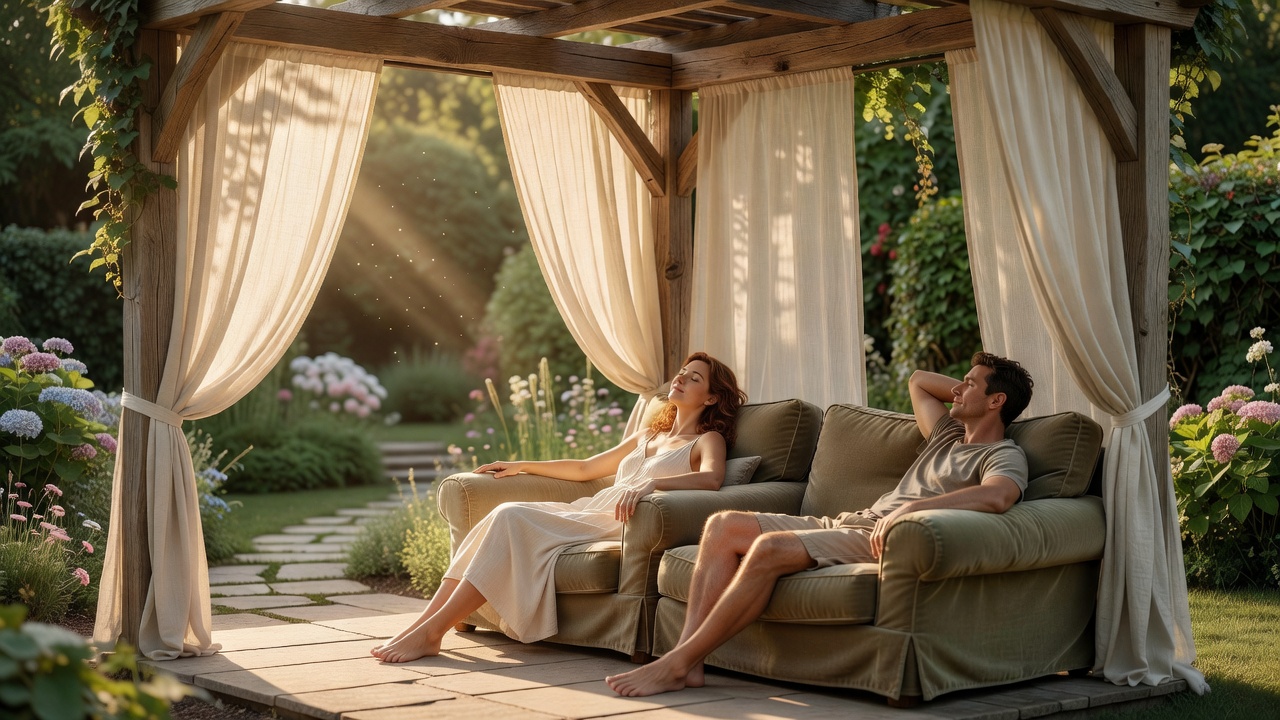
Start with the furniture footprint
Place the table, chairs or lounger before deciding where posts should go. Include the space needed to pull a chair back, walk past someone and reach the garden without squeezing between supports. Mark the outline on the ground and live with it briefly. A generous-looking structure on a drawing can feel cramped once furniture and circulation are included.
Then identify the source of discomfort. If the problem is a view from a neighboring patio, one screened side may be enough. If it is an upper-floor window, look at the line over the proposed roof edge. Avoid enclosing every side simply because a standard kit allows it. Each extra surface changes the light, wind behavior and feeling of the space.
Understand what an open roof can do
A pergola’s beams create rhythm and some shade, but they do not necessarily conceal the people beneath them. Slat direction, spacing, sun angle and the position of an overlooking window determine what remains visible. Check the view in section—a side-on sketch showing heights—rather than relying only on a plan drawn from above.
Climbers can gradually soften the frame, although their coverage changes with season and pruning. Retractable fabric or adjustable roof systems offer different possibilities, but they must be used within their manufacturer’s wind, drainage and maintenance limits. A waterproof roof may also change the structure’s legal classification or approval requirements. Ask the relevant local authority before treating it as a minor decorative addition.
Use curtains as adjustable boundaries
Outdoor curtains can close the view for an evening meal and return to the sides afterward. Choose fabric intended for the exposure and follow its care instructions. Light fabric may glow pleasantly in daylight yet reveal silhouettes after dark when the sitting area is lit. Test a sample with the lighting arrangement you expect to use.
Provide secure tiebacks and a safe way to remove fabric when conditions require it. Loose curtains can whip in wind, catch on furniture or place unexpected loads on tracks and supports. Avoid trailing hems, accessible loops and cords that could create entanglement risks. Keep fabric away from heaters, grills, candles and other ignition sources according to equipment instructions and local fire-safety requirements.
Let shelter be adjustable where the garden needs to stay open.
Choose a structure for the real loads
Even an open pergola must resist its site’s loads and weather. Wind, snow where applicable, wet foliage and accessories all matter. Do not assume an existing deck or thin patio slab can support new posts without assessment. Attaching a structure to a building also requires attention to the wall construction, weatherproofing and suitable fixings.
Use competent local design and installation advice. The American Wood Council and the International Code Council publish construction resources, but a reference document is not approval for a particular structure. Applicable codes, permits and manufacturer instructions vary. This guide does not supply structural dimensions or certify a kit for your site.
Plant for shade without losing control
A climber should suit the climate, support and amount of ongoing care you can provide. Wisteria can become substantial and demands suitable structure and management; it is not a lightweight finishing touch. Some climbing plants are invasive in particular regions, and others have toxic parts. Check local guidance before buying for appearance alone.
Keep growth away from drainage channels, moving roof parts and electrical equipment. Leave a way to inspect joints without cutting away the entire planting. If the aim is simply a softer edge, a container shrub beside the seating area may be more manageable than a vigorous vine overhead. Containers still need drainage, watering and an assessment of their weight on raised surfaces.
Check the space after sunset
Lighting can reverse the sense of privacy. A bright sitting area against a dark garden may become a small stage. Use only the light needed for safe movement and the activity, and aim it away from neighboring windows. The principles promoted by DarkSky International offer a useful starting point for reducing unnecessary outdoor light.
Finally, make a care plan. Inspect fixings and fabric tracks, remove leaves from drainage routes and store seasonal textiles dry. Check the structure after severe weather. Keep a clear route back to the house and avoid turning temporary side panels into permanent barriers without reviewing ventilation, access and structural loading.
If the place feels too enclosed, try opening one side before changing the entire design. A framed view of planting can provide the emotional boundary you wanted while allowing the sky and garden to remain part of the room.