Name the sound before choosing a solution
Spend time in the garden at the hours you actually use it. Is the disturbance a steady traffic wash, occasional deliveries, voices from a nearby terrace or machinery with a distinct hum? Write down the direction, duration and conditions. Wind, leaf cover and the timing of neighboring activities can change what you notice.
A phone recording may help you remember an event, but an uncalibrated phone app is not a dependable basis for specifying a barrier or establishing compliance. If the issue is persistent or consequential, an acoustic professional can select an appropriate measurement method and interpret the result. The Institute of Acoustics and the National Council of Acoustical Consultants are useful starting points for learning about qualified practice.
Separate visual calm from sound reduction
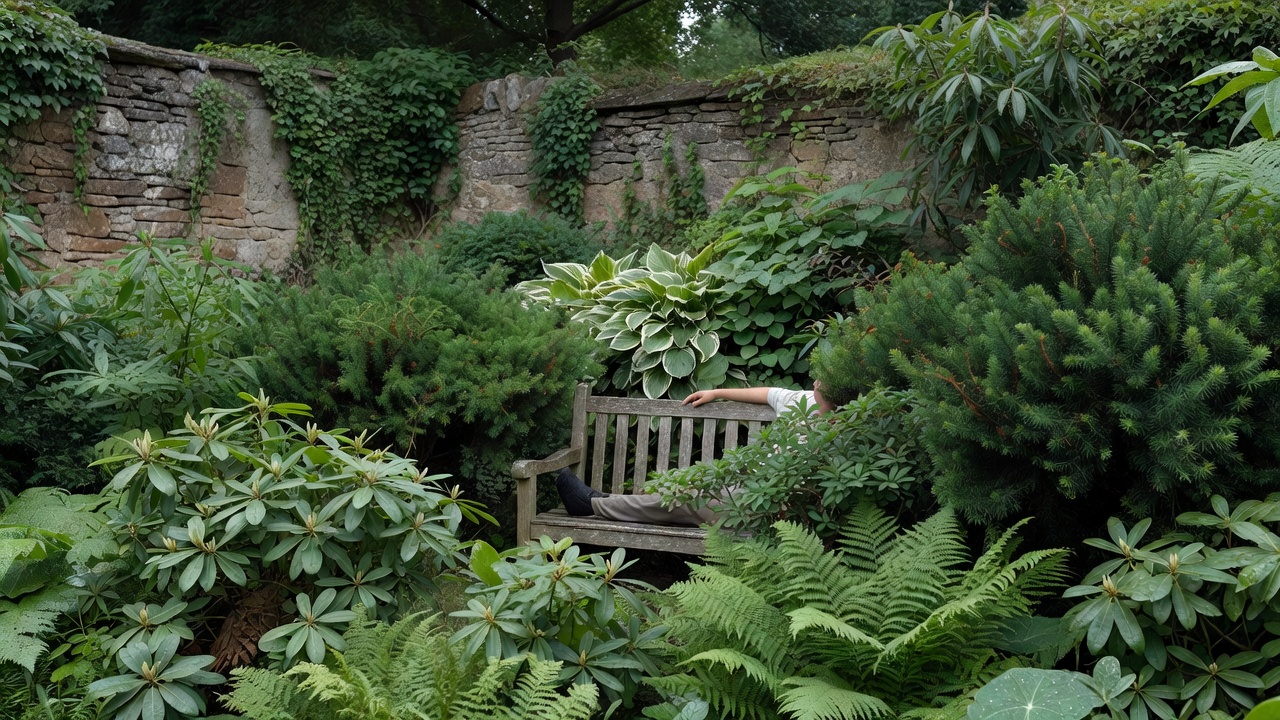
A hedge can obscure moving vehicles and soften the impression of a hard boundary. Bird activity, foliage and seasonal change may improve how the place feels. However, a typical narrow garden hedge should not be sold as a dependable way to substantially lower road noise. Foliage is not a substitute for the continuity, mass and geometry required of a suitable barrier.
Very deep vegetation belts can behave differently from a small domestic planting strip, but their performance depends on conditions and available depth. Research from one landscape cannot simply be applied to a few shrubs beside a patio. Treat precise claims about a particular plant “blocking” a fixed amount of noise with caution unless the complete installation and test conditions are clear.
Make room for planting because it improves the garden—not because silence has been promised.
Try moving the listener
Before building anything, move a chair to several places. A house corner, a substantial existing wall or a lower part of the garden may already interrupt the sound path. Distance can help, but the effect is influenced by the source type, reflections, terrain and surrounding buildings. Do not rely on a universal distance rule for a complicated residential setting.
Compare the new seat at similar times and conditions. Consider whether it still receives useful light and offers a pleasant view. A calmer corner that is cold, inaccessible or far from the house may not be used. Privacy design works best when comfort, daily habits and practical circulation are considered together rather than as separate projects.
Understand what a barrier asks of the site
An effective acoustic barrier generally needs to interrupt the direct sound path and avoid significant gaps. Height, length, location, material construction and surrounding surfaces all affect the result. An open slatted screen that provides visual privacy from one angle is usually a different kind of object from a noise-control barrier.
Sound can diffract over the top and around the ends. Open gates, gaps underneath and discontinuities may compromise performance. A raised road or an upstairs noise source may require geometry that is impractical within a small garden. Reflective surfaces can also change conditions elsewhere, so a solution should consider neighboring spaces rather than shifting the problem.
The Federal Highway Administration noise-barrier resources explain important principles in a transport context. They do not establish a guaranteed outcome for a domestic fence. For a meaningful investment, obtain site-specific advice and ask the designer to state assumptions and expected limitations.
Add pleasant sound with restraint
A small water feature may redirect attention or partly mask a particular sound at a nearby seat. It does not remove the original sound energy, and its effect will vary with distance and the noise being masked. Choose a feature you enjoy rather than one marketed as a universal acoustic fix.
Consider pumps, water use, maintenance, wildlife and child safety. The feature itself should not become a nuisance for neighbors. Similarly, do not assume outdoor speakers are a considerate way to overcome road noise. Introducing more sound can reduce the comfort of adjoining gardens and make quiet conversation harder.
Use planting to complete the place
Once the practical response is understood, planting can make a necessary solid barrier feel less dominant. Leave access for inspection and keep moisture-sensitive materials clear of soil. Choose plants for local conditions and available space, with the same care you would give a living privacy hedge.
A planted slope or earth berm can require substantial land and engineering. Drainage, stability, utilities and boundary impacts need assessment; it is not simply a matter of piling soil against a fence. On a small site, moving the seat and improving visual comfort may be the most realistic outcome.
For disruptive activity, a respectful conversation or local environmental-noise process may be more appropriate than a landscaping project. No garden design guarantees inaudibility or confidential outdoor conversation. Set a specific goal—such as a more comfortable reading corner—and judge proposals against that goal.